
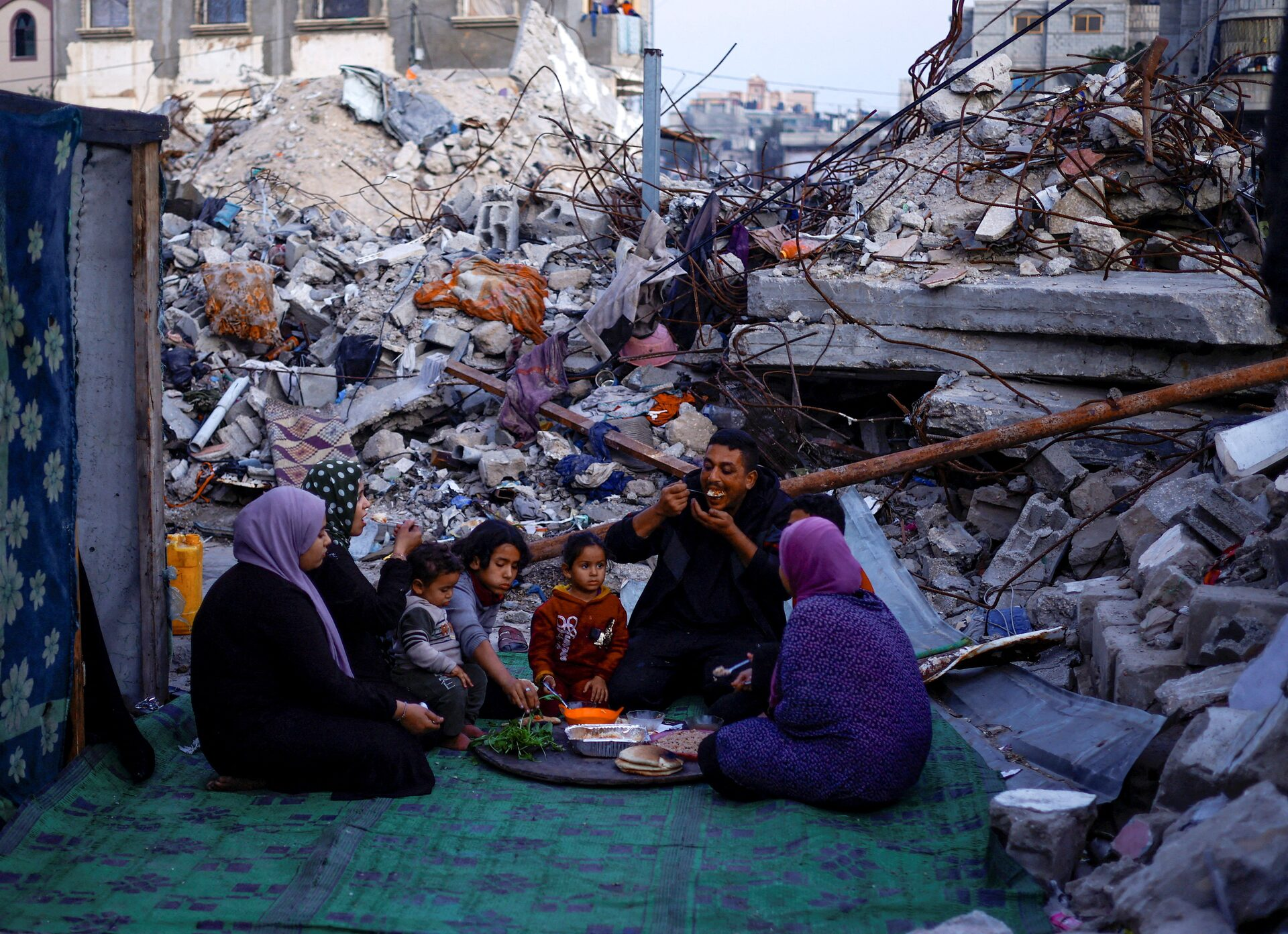
Ramadan – the most joyous month for about two billion Muslims around the world – is around the corner. March 10/11 will mark the start of the holy season during which Muslims will begin to fast every day from dawn to sunset for thirty days. Before you ask: Yes, not even a drop of water! And here is a helpful guide to learn about a few basics.
As a time of prayer and meditation, Ramadan invites Muslims to return to their spiritual core. Life gets in the way and everything vies for our attention. Ramadan is a moment to turn the noise down and be more attentive to the life of the spirit. It is a time of deep self-reflection and a re-assessment of our relationship with God and fellow human beings.
It seems counterintuitive to celebrate a month that calls human beings to deny themselves the most existential needs like food and water. But because Ramadan encourages us to be our best selves it is a joyous moment of deep self-discovery. There are many reasons why we as a religiously diverse society can appreciate the season of Ramadan. Let me only name three.
Inner Freedom
Freedom – a value that we all cherish. But are we truly free if we constantly chase the things that consumer culture dictates us to acquire? Then we feel overwhelmed and unhealthy by too much clutter in our homes and processed food in our bodies. Only human beings have the power to say NO to even their most existential needs like food and water. This is the great gift of human free will. In Ramadan the human being rediscovers their ability to free themselves from everything that is non-essential. If one can show self-restraint from even their most basic needs, then they are capable of achieving much more. This is a truly empowering experience. To discover the potential and pathway for true human liberation is to negate everything that weighs the spirit down. In Ramadan, human beings aspire to the highest level of spiritual self-discipline by engaging the seven gates of the heart more than usual: Eyes, ears, tongue, stomach, feet, hands, and genitals are engaged in a way that honors them being a sacred trust from their Creator. Human beings are invited to refrain from vain and indecent behavior and conduct – all outlined in detail in the Islamic tradition. This is why Prophet Muhammad famously said, “Whoever does not leave evil words and deeds while fasting, God does not need him to leave food and drink.” Harmful, wasteful, meaningless thinking, feeling and doing should be avoided more than ever. Giving in to every urge for instant self-gratification is not an act of freedom. Instead, to attain wholesome and long-lasting pleasure is to let go of certain low desires. In doing so one rediscovers the freeing elements of abstinence, patience and moderation – virtues that the Qur’an praises in high regard.
Gratitude
Oftentimes it is through the absence of things that we start to see their true worth and appreciate them more. At the end of a long fast, a piece of dry bread can taste so good. The value of the first drop of water that flows through the body is affirmed by every cell. We do not need much to be satisfied as this Prophetic narration captures it so well: “Contentment is a never-exhausted treasure.” Expressing gratitude is not only physically beneficial for human well-being but is part of the spiritual DNA. Existential gratitude is the realization that without a compassionate and wise Creator at work we cannot be. Humankind is unable to sustain themselves without that Higher Power that finetunes the universe in such a way for human beings to exist.
Humility
Such awareness invites the person to genuine humility. All blessings on the table can only be enjoyed because of the many hands that touched them. In my own family, we often read the labels on the products to explore where they came from. Bananas from Guatemala, pickles from India, coffee from Ethiopia, chocolate from Belgium – human beings are part of an interdependent web of life. We cannot be without one another. In Ramadan people honor these social connections more than ever by strengthening communities, growing in empathy by feeding those who are less fortunate, by reconciling and asking for forgiveness.
A version of this essay has appeared on U.S.Catholic
The German translation was published on MIGAZIN
Discover more from Zeyneb Sayılgan
Subscribe to get the latest posts sent to your email.

 Zeyneb Sayılgan