When I Die

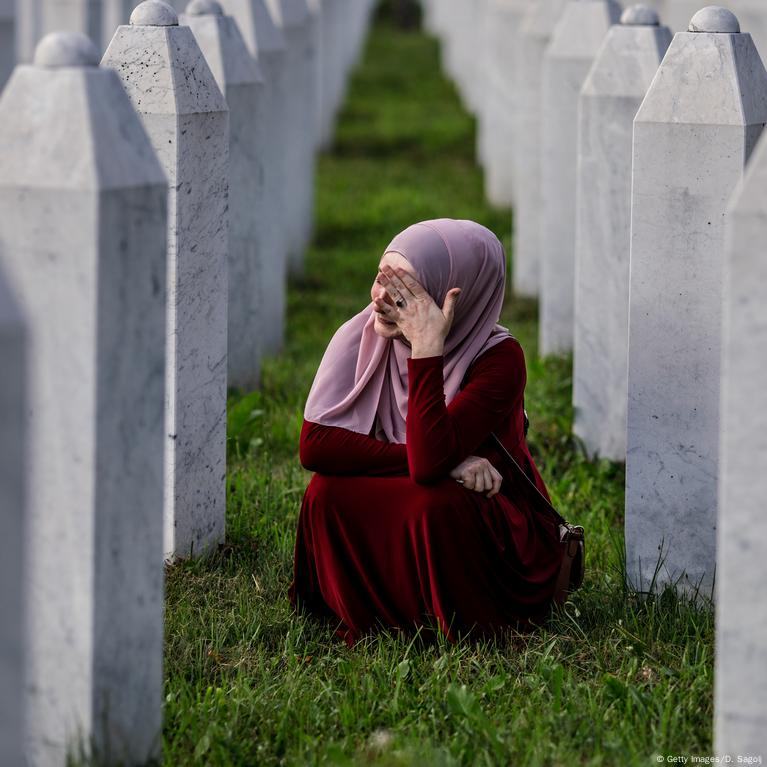
On the day of my death, when my coffin is carried away,

Do not think that I suffer or feel pain in leaving this world.

Do not weep for me, nor say, “How tragic! What a loss!”

For if you fall into such sorrow, you have fallen into illusion— And that would be the real loss.

When you see my funeral, do not cry, “Separation! Separation!”

For me, that moment is not parting— It is the time of reunion and meeting with my Beloved.

When you lower me into the grave, do not say, “Farewell!”

For the grave is merely a veil,

Hiding the great gathering of souls in Paradise.

If you witness my descent into the earth,

Then look also at my rising!

Why should the setting of the sun and moon bring you sorrow?

To you, it may seem like a setting,

But in truth, it is a rising, a new dawn.

Though the grave appears like a prison,

It is, in reality, the soul’s liberation.

Has any seed ever been buried in the earth and not grown?

Then why do you doubt that the seed of man will not sprout again?

Has any bucket ever been lowered into a well

And not returned full of water?

Then why lament when the Joseph of the soul descends into the well?

When you close your mouth in this world,

Open it in the next,

For your cries of joy will echo

Through the realm beyond space and time.

Poem by Mawlana Jalaladdin Rumi

Posted in Death, God, Islam | Tagged | Comments Off on When I Die

Ramadan 2025: Nourishment for the Human Soul

Ramadan is a time of spiritual growth and deep human connection, offering a path to inner and communal transformation.

Ramadan, the holiest and most anticipated month in the Islamic calendar, is just around the corner. This weekend, nearly two billion Muslims worldwide will begin their month-long observance. During this time, they fast from dawn to sunset, refraining from food and drink. If you’re unfamiliar with Ramadan, here are a few key things to know.

Ramadan is a time of profound spiritual renewal, fostering discipline, gratitude, and connection – its impact extends far beyond abstaining from food and drink.

While the physical health benefits of fasting have long been established, in addition to those, there are many ways in which Ramadan also nurtures and strengthens the human spirit. A few aspects stand out in particular.

Fasting for the soul

Prophet Muhammad encouraged the faithful to pursue the highest and most holistic form of spiritual fasting by eliminating distractions—such as eating and drinking—and focusing on a deeper connection with the Divine.

As a result, Ramadan becomes a time for profound spiritual reflection and self-discovery, offering those who observe it an opportunity to pause, realign, and strive toward their best selves. Ideally, this transformation extends beyond the month, shaping their character and actions throughout the year.

As the early 20th century Muslim scholar Bediüzzaman Said Nursi explained, the goal is to engage all inner and outer faculties into a spiritual fast and enter into a sort of almost angelic state.

Avoiding unhealthy and negative feelings and actions is one of the aspirations in fasting. More than ever, Muslims try to abstain from bad speech like gossip, anger and dishonesty. The focus is on self-purification and personal development in moral character. Restraining oneself from indecent speech, looks and conduct are all ways to attain this high ideal of fasting.

In this process of complete devotion and deep contemplation, the one fasting exerts efforts to cultivate more mindfulness and other important virtues like compassion, kindness, humility, patience, persistence and resilience. Here, the Qur’an – first revealed in the month of Ramadan – is the ultimate guide for going through this season of spiritual self-transformation.  

Embracing simplicity: The power of less

Less is More. In a world driven by a consumerist attitude, Ramadan reminds the human spirit through gentle and moderate abstinence, that a return to the essentials is healthy for the human spirit.

Eating too many processed foods and overconsumption is not beneficial to a healthy lifestyle. A life of simplicity and contentment allows the spirit to breathe again. It cultivates greater respect to the natural resources of this earth.

Wastefulness and excess should be avoided. Understanding that one does not need much to be satisfied is a powerful moment of inner liberation. At the same time, Ramadan increases gratitude and appreciation for existential things like water and food by uplifting their true value.

Essentialism also includes minimising distraction, decluttering the heart from all heavy burden and freeing oneself from toxic relationships. Distancing oneself from stress and envy and limiting a materialistic lifestyle are good ways to focus on simplicity.

Taking a digital detox from social media, if it becomes overly consuming and impacting one’s mental well-being, also seems wise. Ramadan is a time of introspection and reassessing one’s life and relationships.

Strengthening bonds

The food that one enjoys at the end of the day is often prepared by many human hands working together. More than ever, Ramadan serves as a reminder of human interdependence and our fundamental need for one another.

There is a heightened sense of community, solidarity and charity. Indeed, Ramadan calls human beings to nourish and strengthen each other by generously sharing one’s wealth and goods. In this time of giving, Muslims typically donate 2.5 percent of their wealth to the needy as a fulfillment of their obligatory almsgiving (zakat). They also host and sponsor many public community iftars and invite their non-Muslim neighbours to join them as well. These programs are a wonderful opportunity to learn and connect with one another.

In addition, fostering healthy and meaningful social connection is key to human flourishing and vitality.

The sacred month invites people to nurture social ties and respond to each other’s emotional and mental needs. Loneliness is detrimental to human health. Strong community bonds are essential for overall well-being.

Breaking fast together, spending increased time in communal prayers, reaching out to one another through acts of kindness and charities – all this helps to counteract isolation and foster a greater sense of belonging.

It is in this spirit that Ramadan presents a mandate to answer holistically to the needs of fellow human beings. Taking care of families, relatives, friends, neighbours and fellow human beings is a crucial aspect of holistic fasting. Making an effort to let go of grudges and resentments, trying to forgive one another and reconcile are all ways to cleanse and purify the heart from all unnecessary weight.

For all of these and many more reasons, Ramadan has been aptly described as the month of mercy and is always welcomed by Muslims as an occasion of spiritual rebirth and renewal. With the focus on personal self-development and healthy community building, non-Muslims too can appreciate the many benefits of this rich spiritual season of Ramadan. 

The German version appeared on IslamiQ and on Islamische Zeitung

Posted in Bediüzzaman-Said-Nursi, Community, God, Islam, Quran, Ramadan, Risale-i Nur | Tagged , , , , | Comments Off on Ramadan 2025: Nourishment for the Human Soul

An Ode to a Snowflake – Inspired by the Risale-i Nur

O delicate jewel of the sky,

Crafted by the Hand unseen, so high,

You fall, a soft, pure messenger,

A sign of mercy that we confer.

In your fleeting form, you softly weave

A thousand secrets we long to believe.

Each crystal, each facet, uniquely spun,

A reflection of the Divine, the One.

In the language of Risale’s light,

You whisper truths in the silent night.

For every flake that gently falls,

Speaks of God’s mercy, His loving calls.

O snowflake, you remind the heart,

That the Creator’s hand gives us each part.

In your fragile beauty we see

The infinite wisdom of unity.

How gentle, how pure is your descent,

As if each fall is a prayer sent—

An offering of peace and grace,

A celestial gift, an embrace.

The earth below, you gently kiss,

A sign of the Creator’s bliss.

For in your short-lived, graceful flight,

We see the eternal, the sacred light.

O snowflake, in your fleeting form,

You mirror the universe, reborn.

With each delicate shimmer, you say,

That all is governed by His Way.

In every crystal, a world reflected,

In every fall, His wisdom detected.

You are but one, yet in you we find,

The unity of the heart and mind.

So teach us, O snowflake, to see

The signs of God in all that be.

In your brief existence, pure and bright,

We witness the Divine’s eternal light.

With every flake that kisses the earth,

We are reminded of our worth.

As transient as you may appear,

In your quiet fall, we draw near.

You are the symbol of mercy and grace,

A reminder of the Divine’s embrace.

O snowflake, though you melt away,

You lead us to the Light of day.

AI generated piece

Posted in Bediüzzaman-Said-Nursi, God, Islam, Risale-i Nur | Comments Off on An Ode to a Snowflake – Inspired by the Risale-i Nur

I grew up Muslim in a Catholic community – and Mary represented common ground

I had just finished teaching a class on “The Muslim Mary”. Many non-Muslims who attended were puzzled to find out that Muslims had a connection with Mary at all, and had no knowledge of how important she is to our belief and practice. This came as no surprise. Half of Americans report they know “not much” or “nothing at all” about Islam.

As a Muslim girl growing up in the overwhelmingly Catholic state of Rhineland-Palatinate in Germany, Mary was a constant presence in my life. Her images and statues, dotted across my city, smiled at me as I walked to school. At Christmas time, I joined with my classmates to sing songs such as Stille Nacht, heilige Nacht.

At home and in the mosque, I was fascinated to learn about Mary’s exceptional character, courage and devotion. She is one of the most honoured women in Islam and the Qur’an dedicates the entire chapter 19 to show her high status. She is special, not only because she was the mother of Jesus but because of her exemplary spirituality, worship and service to God.

For me and many Muslims, she remains a role model of how to cultivate moral character, trust and hope in God in times of despair. She demonstrates that in uncertainty, there is also possibility. Mary was faced with so many struggles, yet she persisted. As a young woman who experienced many obstacles because of my Muslim headscarf, Mary encouraged me not to surrender to prejudice and stereotypes. Like her, I pressed forward in finding my place in the world.

As I grew older, I continued to listen to Muslim Christmas songs with my daughters, one of whom I named Maryam – Mary’s Arabic name in the Qur’an. In naming my daughter after Mary, I prayed that she too would embody her piety and those beautiful virtues of compassion, humility, courage and hope.

Mary’s presence is visible in many parts of the Muslim world. The mihrab – the wall structure in every mosque that points in the direction of the Kaaba in Mecca, the shared focal point for Muslims in prayer – is also the name of Mary’s private sanctuary room as mentioned in the Qur’an.

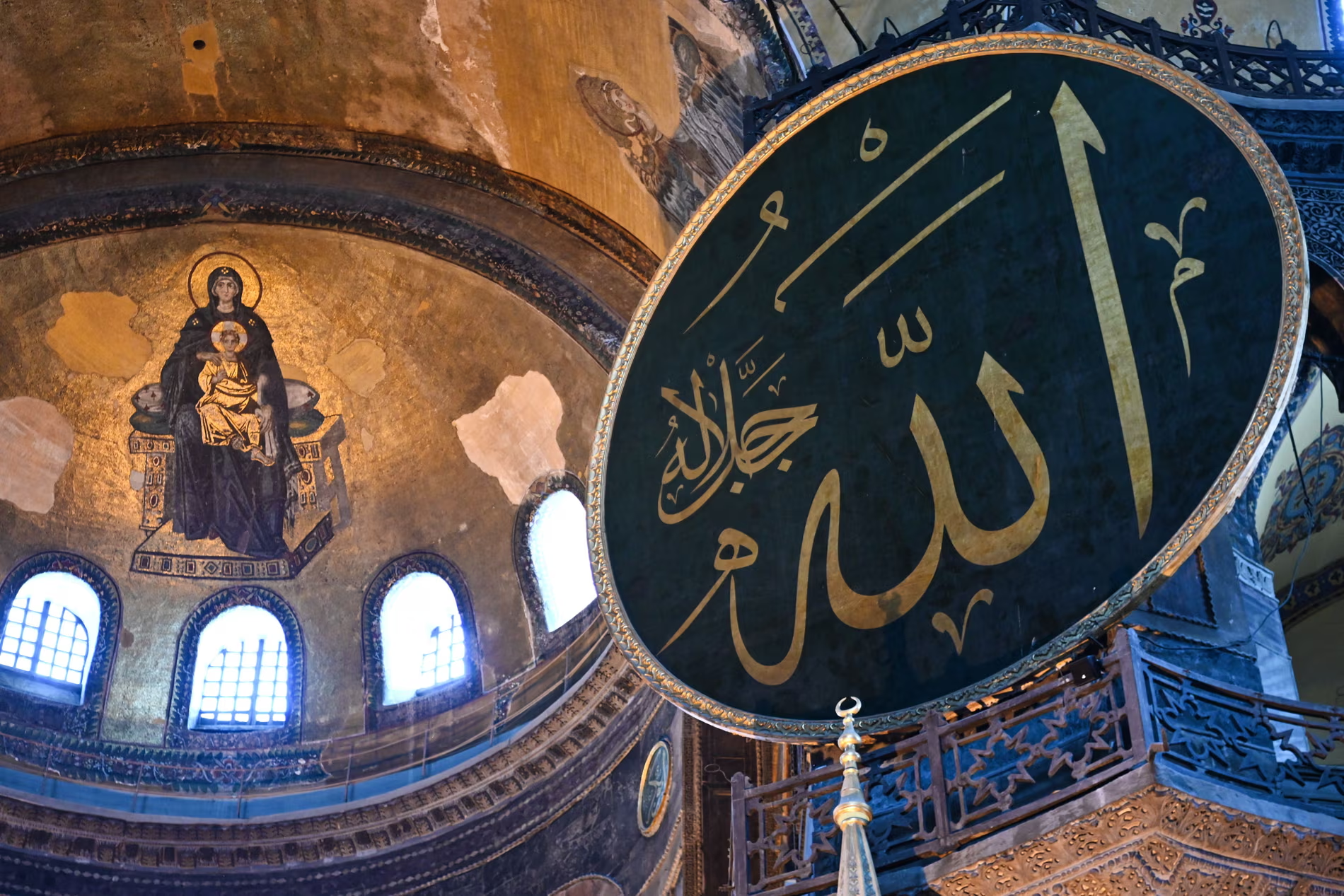
Often I would take my students to Mother Mary’s House (Meryem Ana Evi), a pilgrimage site in Turkey where Muslims and Christians honour this holy figure. We would of course also visit the Hagia Sophia in Istanbul and look up at Mary, who watches over all the worshippers who enter the mosque for prayer. Out of respect to Islamic monotheism, which does not allow any images or statues, Mary’s beautiful painting is typically covered during prayer times.

Mosques in the United States take pride in naming themselves after Mary and Jesus. The Maryum Islamic Center in Maryland, the Maryam Islamic Center in Texas and the Jesus, Son of Mary mosque in New York – all point to the sacred connections between Islam and Christianity.

Mary is a symbol of the enduring relationship between the Abrahamic religions. The Qur’an recognises that she was raised within the foundations of the Jewish faith and that Jesus was the promised messiah. Qur’anic inscriptions on Mary and Jesus found in the Dome of the Rock from the seventh century express points of connection between religions while maintaining Islam’s theological distinctions.

While getting to know more about the Christian Mary throughout my life, I have not compromised my own Muslim beliefs or glossed over those important theological differences. For Christians, Mary remains the mother of God (Theotokos) and occupies a high position in the idea of “God made flesh”. Muslims, however, see her as the mother of the Prophet Jesus, who is fully human and not God incarnate. Her significance comes from her own traits, such as her purity and devotion. I learned to live with healthy disagreement and affirmed those unresolvable tensions.

Similarly, in exploring the Muslim portrayal of Mary, I hope that my students left my class with a richer and greater appreciation of her spiritual legacy. We all agreed about her expansive compassion and her embodiment of hope.

Christians and Muslims together make up more than half of the world’s population. I hope that we can honour Mary together in working for more mutual understanding and the betterment of our human family.

This piece was published in The Guardian

The German version was published on IslamiQ and on Islamische Zeitung

Posted in Islam, Mary | Tagged , , , , , , , , | Comments Off on I grew up Muslim in a Catholic community – and Mary represented common ground

Death The Greatest Teacher: Three Life-Lessons From The Child I Lost

If you want advice – death is sufficient, says Muslim scholar Bediüzzaman Said Nursi. True. Every time I visit the gravesite of my sweet three-year-old Meryem, I am painfully awakened in new ways. Her love and light continue to sustain and strengthen me. She has turned into a spiritual guide of some sort and invites me into her new afterlife. Our reconfigured relationship prioritizes existential questions. More than ever, my thinking, writing, and teaching centers around marginalized topics like suffering, death and grief. To me, my dead daughter imparts the greatest lessons on life. For Muslims, the meditation on death should be ideally part and parcel of daily spiritual practice. A moderate amount of a healthy fear of death enhances the quality of life and becomes life-preserving. However, humans tend to forget as the Qur’an points out and we all can be prone to fall into a mode of avoidance or denial:

“And do not be like those who forget God, so He made them forget themselves. It is they who are truly rebellious.” [Surah Al-Hashr: 59;19]

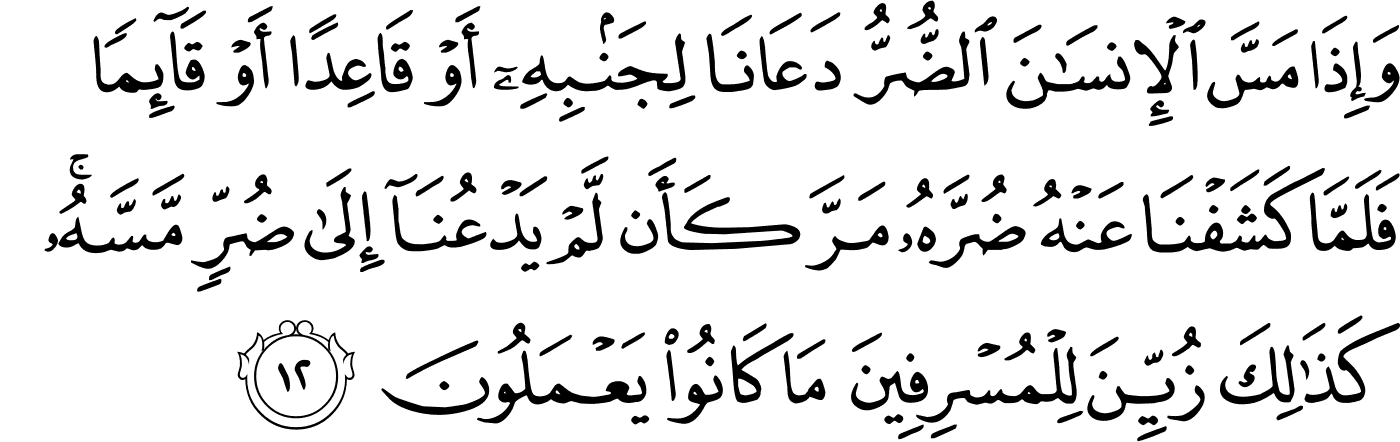
“When trouble befalls the human being he cries out to Us, whether lying on his side, sitting, or standing, but as soon as We relieve him of his trouble he goes on his way as if he had never cried out to Us to remove his trouble. In this way the deeds of such heedless people are made attractive to them.” [Surah Yunus:10;12]

As for many, remembering death frequently has given me a greater clarity, sharper vision and more in-depth understanding of life. Death can strangely make you more alive and transform you into a better version of yourself. A reason why many thinkers concluded that life has no meaning without mortality. In that regard, three profound life-lessons in particular have stood out to me:  

1. We are all migrants

As humans we are fundamentally migratory beings. Change, mobility, movement and motion are essential to human development and flourishing. Without inner and physical activity we cease to thrive and exist. We age, reach our peak and gradually decline. Again, slowly migrating from one stage to another is intrinsic to the human experience. Death is an inescapable reality. None of us is bound to stay on this earth. The Qur’an mentions in Surah Al-‘Araf [7:172] about the primordial covenant and gathering of the souls. According to that we came from a celestial origin, “And when your Lord brought forth from the children of Adam, from their loins, their seed, and made them testify of themselves: “Am I not your Lord?” They said: “Yes, we testify.”

We dwell on earth for a determined period and ultimately have to return to our final destination – our heavenly home. Yet, we pretend we can claim absolute ownership on our bodies, our loved ones, our wealth and property, and on God-given resources and territory. None of it belongs truly to us. The True Owner calls us to support and uplift one another on this universal journey, “They believe in God and the Last Day, and they enjoin what is right and forbid what is wrong and hasten to good deeds. And those are among the righteous,” [Surah ‘Ali-Imran: 3;114]. Indeed we belong to God, and indeed to Him we will all return, declares the Qur’an. If I am only a guest, trustee and caretaker of this earth and all what it contains, I strive to make sure that I walk and act humbly on this planet and return everything in the best manner back to my Creator. If I am destined to leave and none of my attachments can come with me, then perhaps I should focus on leaving a spiritual imprint or moral legacy behind and use all what I have as a means to achieve this vision. 

2. Mindfulness – Life is now

The past is gone. Learn from its lessons. Tomorrow is non-existent – the future is not promised. Ruminating too much over the past, overthinking and excessive worry about the future is also wasted mental energy that we desperately need for the now. Therefore, do not cry before beaten, says Bediüzzaman again. Mortality makes us intensely aware that all what we have is this very moment. The present is truly a present – a blessing not taken for granted.

Often, I go back to my last time with my daughter and I am grateful that all the important things that truly matter were said, felt and done. As I want to return in peace to my Creator, I try to be more kind to myself and others, more forgiving and ideally not to hold onto grudges. True human liberation comes with a sense of freeing oneself from destructive and harmful thoughts. The future while unknown holds also the possibility for goodness. To anticipate it with hope and good assumptions is a characteristic of a believer. To assume the best of God and trust in His Decree puts the heart at ease. Whatever He subḥānahu wa ta'āla (glorified and exalted be He) has written for you will be in your best interest.   

3. Gratitude – Focus on abundance over absence 

Meryem’s death called me to slow down, to pay more attention, to live more mindfully, to make every day count and to be more aware of my blessings. I aspire to live more consciously and more holistically by engaging all my inner and outer senses in a mode of gratitude: when I enjoy an apple or my coffee, I practice the art of noticing. I reflect on the creation, shape, smell, taste and origin of my blessing and find more wholesome delight by recognizing the love and care of my compassionate Creator. I try to respond to His Love by doing more of what He values and what really matters: cultivate deeper connection with God and the creation, maintain meaningful relationships and engage in more service to others.

At the same time, I have given up on the illusion that my to-do tasks will ever be fully accomplished. The fate of the world is thankfully not on my shoulders. I do the best I can on a daily basis, but the work will not finish with me. It will continue. That perspective gives me comfort. I committed myself to a vision that focuses more on abundance and contentment instead of absence and complain.

Death is truly the greatest teacher. If we face our mortality with courage, it will enhance the quality of our lives. Whatever weighs us down or is detrimental therefore needs to go: Toxic relationships, unnecessary distractions, material clutter that overwhelms. Our Prophet Muhammad ṣallallāhu 'alayhi wa sallam (peace and blessings of Allāh be upon him) encouraged us therefore to be in this world like a traveler or a stranger. Life is a brief moment. We are bound to leave any time. This sustained remembrance of death forces us to examine what is truly essential on this journey and for our ultimate destination. 

This piece was published on MuslimMatters

Posted in Death, Islam | Tagged , , , , , , , , | Comments Off on Death The Greatest Teacher: Three Life-Lessons From The Child I Lost

Imam Ali (ra) and His Wisdom for the Interreligious Life

This past July Muslims around the world entered the new Islamic year of 1446. The first Islamic month of Muharram is a moment in which Muslims not only observe the important fast of Ashura but also commemorate the martyrdom of Imam Husayn – the grandson of Prophet Muhammad. In one holy narration, the Prophet famously said,  Husayn is from me and I am from Husayn. God loves anyone who loves Husayn. He is one of my distinguished descendants.

Both Sunni and Shia Muslims express a deep love for the family (ahl al-bayt) and descendants of Prophet Muhammad who throughout Islamic history were regarded as spiritual guides, saints and scholars. Muslim scholar Bediüzzaman Said Nursi dedicates many of his writings to the importance of the Prophet’s descendants – most notably in his Fourth Flash. There, he reintroduces the famous Jawshan al-Kabir – a Prophetic supplication that includes the Divine Names –  into Sunni Muslim devotional practice. This important prayer was preserved by the Prophet’s great-grandson Ali Ibn Husayn (also known as Zayn al-Abidin) and was later adopted by Sunni Muslims through ​​Ahmed Ziyaeddin Gümüşhanevî’s (1813-1893) famous work Mecmûatü’l-Ahzâb. 

Following the strong spiritual practice and recommendation of Said Nursi, the students  (Nur talebeleri) of his Qur’anic exegesis (the Risale-i Nur) recite the litanies, supplications and invocations of the Jawshan almost daily alongside their regular Qur’an recitation and Risale reading. The Jawshan includes prayers by Uways al-Qarani, Shah Imam Naqshiband, ‘Abd al-Qadir al-Jilani and other major spiritual guides and therefore not only revives the best of the Islamic spiritual tradition but also maintains a sacred connection to it in modern times. While the global Nur community does not constitute a formal hierarchical Sufi order, it nevertheless embraces the spiritual wisdom of the various Sufi orders through regular immersion with the Jawshan and the content of the Risale.      

Among the relatives of Prophet Muhammad, Imam Ali – his cousin and son-in-law – stands out as a continuing source of inspiration and guidance for Muslims around the world. Imam Ali is a central figure in both Sunni and Shia traditions and was the fourth caliph of Islam. He is considered the first Shia Imam.  

His most famous work – the Nahj al-Balāgha (Arabic: “the path of eloquence”) – is acknowledged both by Sunni and Shia communities as a significant contribution to Islamic thought and culture. Nahj al-Balāgha is particularly revered in Shia Islam, the text is considered a masterpiece of eloquence and wisdom. The collection contains sermons, letters and sayings on many themes like ethics, justice, spirituality and wisdom. The following provide a taste on the richness of his writings: 

On Ethics: Do, may God look after you, righteous deeds, tread the paths of what is permissible, put what is prohibitive aside and abandon it, listen to the command of God and realize it, keep in touch with your kinsfolk and look after them, disobey your inclinations and curb them, give your daughters by way of marriage to the people of righteousness and piety, and stay away from the folks who sport and who covet, so your marriage ties will produce the most pure of freemen, the most eminent descent, those who will let you achieve your dreams.

On Spirituality: I praise the One Whose boon is great, whose blessing overwhelms, whose mercy is faster than His anger, the One whose word is perfect, whose will is affected, whose argument is wise, whose case is just. I praise Him like one recognizing His Godhead, submissive while adoring Him, dissociating himself from his sin, recognizing His Unity, seeking refuge with Him against His warning, hopeful for the mercy of his Lord that saves him on a Day when everyone will be distracted even from his offspring and tribe. We seek His help, guidance and directions. We believe in Him and depend on Him. I have testified to Him as a sincere and convinced servant; I recognize His Uniqueness as a pious believer, and I have recognized His Unity like a submissive servant. 

On Wisdom: Remember that this world which you covet so ardently and attempt to acquire so earnestly, and which sometimes annoys you and sometimes pleases you so much, is neither your home nor a permanent destination. You have not been created for it, nor invited to it as your resting-place. It shall neither remain with you for ever, nor will you remain in it eternally. If it has enticed you away with its charrns, it has also warned and cautioned you of real dangers lurking in its folds. Take account of the warnings it has given you and do not be seduced or deceived by its allurements. Let these warnings frighten you from being too greedy to possess it. Try to advance towards the place where you are invited for eternal bliss and turn your face away from the vicious world. 

Interpretations of Nahj al-Balāgha can differ significantly between Sunni and Shia scholars. Shia scholars typically view the text as central to understanding Imam Ali’s role as a divinely appointed leader, while Sunni interpretations may focus more on its philosophical and ethical teachings rather than its sectarian implications. Famous Sunni scholars like Muhammad Abduh and Shia scholars like Ibn Abu Al-Hadid offered their own commentaries on Imam Ali’s magnum opus. Al-Hadid’s work is considered the most widely known and best written commentary. 

Out of Imam Ali’s many reflections on interreligious life, this one in particular has always guided me in my own quest for seeking better understanding among communities:

Remember, people are of two kind: either your siblings in faith or your equals in humanity. Regardless of the many unique and important differences among people, one can always affirm the unity and shared bond within the human family. Imam Ali encourages his fellow human beings to focus on the elements that connect us instead of those that divide us. Faith-based sisterhood and brotherhood opens the door to countless connections while securing rights for those who are religiously unaffiliated. The clear tone of simple mercy, kindness and equality to all is echoed in these words.

Each human being is unique and special. Yet, we are all fashioned the same way. This sentiment is an echo of the Qur’anic teaching regarding the creation of the human being, which reminds us that our ultimate origin is the same: We created the human being from an essence of clay, then We placed him as a drop of fluid in a safe place, then We made that drop into a clinging form, and We made that form into a lump of flesh, and We made that lump into bones, and We clothed those bones with flesh, and later We made him into other forms––glory be to God, the best of creators! (Qur’an 23:12-14).

We may come from different cultures, speak different languages and be of different complexions and colors, yet, we are in need of the same basic necessities for life and aspire to the same goals of love, freedom, justice and safety for all. 

While being authentically rooted in his own Muslim tradition, Imam Ali was open to engagement with others. He exemplified principles of justice and fairness in his interactions with people of diverse backgrounds and remains a paragon of this Qur’anic wisdom, O humanity! Indeed, We created you from a male and a female, and made you into peoples and tribes so that you may know one another. Surely the most noble of you in the sight of God is the most righteous among you. God is truly All-Knowing, All-Aware.

This article has been published in The Maydan

The German translation was published on Islamische Zeitung

Posted in Community | Tagged , , , , , , | Comments Off on Imam Ali (ra) and His Wisdom for the Interreligious Life

The Grieving Prophet – How this Muslim Mother finds Comfort in Muhammad’s Sorrow

He buried his own six children. Three of them died in infancy and three others in young adulthood. His only surviving child – daughter Fatima – died six months after him. Prophet Muhammad was no stranger to death. His father died before he was born. His mother died when he was six years old leaving him as an orphan. His beloved grandfather Abdulmuttalib died shortly while he was in his care. His beloved wife Khadija and his uncle Abu Talib – who was his sole protector against Meccan persecution – both died in the same year. Scholars speculate that Khadija died early probably due to malnourishment from the three-year boycott that left the early Muslim community to starvation. This time of anguish and sadness has been known in Islamic history as the “Year of Sorrow.” The Prophet’s dear uncle Hamza was not only killed during war but his body was also shamefully mutilated. Many of his friends and companions were tortured in front of his eyes. Prophet Muhammad had to also witness the abhorrent pre-Islamic practice of female infanticide which the Qur’an ultimately prohibited. Mortality rates were high in the pre-modern harsh desert environment of the 7th century.

Death was all too common to Prophet Muhammad. Grief was a constant in his life. As an adult man, he often returned to his mother’s grave to honor and remember her. His companions saw him weeping and were moved to tears. For Muslims then and now, Prophet Muhammad continues to be a source of light, guidance and comfort in the midst of their own sadness and grief.

My son died in infancy. My three-year old daughter Meryem was tragically killed by a truck. I will never get over it but I am slowly learning to integrate this tragedy into my life. As a grieving Muslim mother I look up to Prophet Muhammad in my constant sorrow and heartache. I turn to his holy narrations describing his own anguish. One particular account of the impending death of his two year old son Ibrahim moved me to tears:

The Prophet was so shocked at the news that he felt his knees could no longer carry him, and asked Abd al Rahman ibn Awf to give him his hand to lean upon. He proceeded immediately to the orchard and arrived in time to bid farewell to the infant dying in his mother’s lap. Prophet Muhammad took the child and laid him in his own lap while shaking his hand. His heart was torn apart by the new tragedy, and his face mirrored his inner pain. Choking with sorrow, he said to his son, “O Ibrahim, against the judgment of God, we cannot avail you a thing,” and then fell silent. Tears flowed from his eyes. The child lapsed gradually, and his mother and aunt watched and cried incessantly, and the Prophet never ordered them to stop. As Ibrahim surrendered to death, Prophet Muhammad’s hope which had consoled him for a brief while completely crumbled. With tears in his eyes he talked once more to the dead child: “O Ibrahim, were the truth not certain that the last of us will join the first, we would have mourned you even more than we do now.” A moment later he said: “The eyes are shedding tears and the heart is saddened, but we do not say anything except that which pleases our Lord. Indeed, O Ibrahim, we are saddened by your departure from us.”

Reading these and many more eyewitness accounts from the Prophet’s life, comforted me as a mother in so many ways. These were public documents accessible to all at all times. They demonstrated that grief was a public affair. It was a human and universal feeling. Grief was not a medical condition to be treated or singled out. As a human being, as a man, as a parent, as a person of utmost love and conviction to God – Prophet Muhammad gave himself permission to feel his sadness, shed tears in public and express his sorrow. On one occasion, one of his companions was puzzled when seeing the Prophet of God cry to which he responded that shedding tears is an expression of God’s mercy. A tender and soft heart is a blessing from God. His understanding of sacred manhood and strong masculinity includes the courage to be vulnerable. Real men can cry. People of strong faith can shed tears.

Prophet Muhammad allows himself to be fully human and whole by holding space for all emotions. There is no anger, no wailing, no doubt, no questioning. I see in him ultimate surrender, trust, acceptance, contentment and peace with God’s decree. These are attitudes Muslims strive for – to be at peace with oneself and life’s circumstances that are beyond human control. Despite the agony of witnessing his six children die, his integrity and certainty in the afterlife remain unshaken. Muslims affirm that the Prophet witnessed the heavenly realm during the holy Night Journey (mi’raj). He saw Prophet Abraham surrounded by deceased young children playing in the gardens of Paradise. He came back to deliver the good news of hope and a future yet to come. Our children are alive. They are safe. They are rejoicing over their return to their celestial home. We will join and reunite with them.

Death is a transition – not the end. In the words of Muslim theologian Bediüzzaman Said Nursi:

Death is not destruction, or nothingness, or annihilation; it is not cessation or extinction; it is not eternal separation, or non-existence, or a chance event; it is not authorless obliteration. Rather, it is to be discharged by the Author who is All-Wise and All-Compassionate; it is a change of abode. It is to be despatched to eternal bliss, to your true home.

These are the Prophetic teachings that continue to sustain bereaved Muslim parents like me in their agony. They are the reason why Muslim Grandfather Khaled Nabhan whose grandchildren were murdered in Gaza can still find joy and be a beacon of light for others. Similarly, Muslim father Dr. Abdul Munim Jitmoud drew on Prophetic inspiration in being able to not only forgive but also embrace his son’s killer. It is through Muslims like these from whom we receive a glimpse of the beauty and spiritual impact of Prophetic character and wisdom.

By worldly standards, Prophet Muhammad lived the most miserable life. He was poor, orphaned, faced ridicule and persecution by his own people. He endured starvation, exile and conflict and experienced death. Yet, he is known to Muslims as the Most Beloved of God (habibullah). His moral and spiritual legacy endures. Prophet Muhammad’s example is a meaning-making map to navigate life and death. In the words of the late Imam and Muslim chaplain Sohaib Sultan, the Prophet not only showed his followers the art of living but also the art of dying with grace and dignity.

This article was also published on U.S.Catholic and MuslimMatters

The German version was published on IslamiQ and MIGAZIN

The essay is also available in Turkish on Perspektif

Posted in Death | Tagged , , , , , , , | Comments Off on The Grieving Prophet – How this Muslim Mother finds Comfort in Muhammad’s Sorrow

The Hijra – Lessons from The First Muslim Migration for Today

This July Muslims entered their new Islamic year of 1446. Day one of the Islamic lunar calendar is based on a momentous event – the hijra or migration from Mecca to Medina in 622 CE. The early Muslim community who faced persecution, starvation and harassment by their own people had no choice but to flee their homeland. Those muhajirun (emigrants) were welcomed generously by the ansar (helpers) – the new Muslims of Medina.

These helpers had very limited resources to offer and share. Yet, despite living with simple means in the harsh desert environment, they were willing to embrace the newcomers with an attitude of compassion and utmost generosity. The emigrants as well understood that they are in no position to take this for granted. In a similar posture of selflessness, they contributed their best in advancing their new community. Conflict and concord were a reality of human relationships then as they are now. They muddled through the messiness of being in community and ultimately made it work. The difficulties of creating a new sustainable social entity are acknowledged by the Qur’an itself, In His mercy God has turned to the Prophet, and the emigrants and helpers who followed him in the hour of adversity when some hearts almost wavered: He has turned to them; He is most kind and merciful to them (Qur’an 9:117). However nostalgic this might sound, their mutual love, embrace, constant sacrifice and tireless communal work were the seeds that launched the new expansion of the Islamic empire.  

Challenging the Dehumanizing Public Discourse on Immigration

I am an immigrant myself. Today, as I look back to this profound event that shaped the global Muslim community in profound ways, I am reminded that it takes both sides – immigrant and receiving communities – for societies to flourish. The climate crisis, global wars and worldwide poverty force us to rethink our understanding of what it means to truly belong: Are national, territorial constructs, borders and slim passports sufficient to capture the emergence of hybrid, fluid and transnational identities? In the face of mass displacement, forced immigration and the global refugee crisis, could we transcend seeing a human being from a simply utilitarian perspective? Are immigrants and refugees either a burden or a benefit  – socially, economically, politically? Could we refrain from the dehumanizing, degrading and otherizing public discourse and arrive at one simple fact: the immigrant and refugee is a stark and embodied reminder that life is fragile, stability and certainty is an illusion and that each of us can lose their livelihood and home within a moment. Those of us who claim adherence to the Abrahamic religions, very well know that we were at the margins of society and that our very origin stories are rooted in the painful experiences of of exile, refuge and immigration. This is all the more reason that religious communities need to wake up from this historical amnesia and claim their responsibility in taking care of the newcomer and welcoming the stranger. It pains me that the fundamental dignity and worth of human life gets lost in the dehumanizing public discourse on immigration.         

Towards a Holistic Approach – Sacred Responsibilities of both Migrant and Host

As an immigrant child myself, I have witnessed that these communities are the most loving, hardworking, resilient and selfless people who deeply care. True, some too can fall into romanticizing their countries of origins while cultivating a nostalgia of the past and embrace a so-called paradigm of rejection. Such an attitude does not allow for a view that their new place has to offer something valuable. Everything and everyone was always better “back home.” I know very well that such sentiments can be common and understandable in the early years of an especially forceful and involuntary immigration experience. They need to be acknowledged and worked through. Trauma, pain, sadness and grief over so many loved ones, losses and memories left behind are a reality. 

The hijra tells the story that in loss there can also be gain. That hardships can be blessings in disguise. In absence, abundance can be found. Both – receiving and immigrant communities – must display an openness to new possibilities. That acting in mutuality, solidarity, and unity can indeed be a reality when done holistically in calling all parties to their sacred responsibilities toward one another. In the words of Muslim theologian Bediüzzaman Said Nursi we must strive to emulate the cosmic brotherhood and sisterhood displayed throughout the creation. We can and must embrace one another (teanuk), support one another (tesanüd), respond to each other’s needs (tecavüb), and help one another (teavün). At our core we are social beings intricately connected and interwoven. What effects one will effect everyone.

Anti-Immigrant Riots in The UK

The recent anti-immigrant riots in the UK offer a stark and troubling contrast to the principles of mutual support and solidarity illustrated by the hijra and the teachings from the Qur’an and Islamic tradition. These riots, marked by violence and xenophobic rhetoric, reveal a disturbing trend of fear and hostility towards immigrants and refugees, highlighting the urgent need for a more compassionate and inclusive approach to these issues.

In the context of the hijra, the early Muslim community’s experience underscores the possibility of flourishing through mutual support despite adversity. The Ansar’s welcoming attitude towards the Muhajirun exemplifies how communities can overcome difficulties through empathy and cooperation. In contrast, the recent riots demonstrate a failure to uphold these values, with many immigrants facing hostility and dehumanization rather than the support and solidarity they need.

The events in the UK reflect broader challenges in addressing immigration, often fueled by economic anxiety, political rhetoric, and misinformation. These riots reveal how fear and prejudice can overshadow the principles of mutual aid and understanding.

Addressing the root causes of such hostility requires a commitment to fostering understanding and empathy, rather than succumbing to fear and division. The hijra’s lessons teach us that with openness, cooperation, and compassion, communities can transform challenges into opportunities for growth and solidarity. It is through embracing these principles and actively working to bridge divides that we can begin to counteract the negative trends seen in recent events and build a more inclusive and supportive society for all.     The first Muslim migration was an early success story showing that the human family must act with the full consciousness and deep understanding that we are part of an interdependent whole and that each of us is an important unique piece in the sacred fabric of life. Each of us is called to do their part in making community work through sharing their God-given selves and skills, their divinely entrusted wealth, the God-given land and resources as echoed in the Qur’an, Those who believed and emigrated and struggled for God’s cause with their possessions and persons, and those who gave refuge and help, are all allies of one another […] But if they seek help from you against persecution, it is your duty to assist them, except against people with whom you have a treaty: God sees all that you do (Qur’an 8:72).

This essay was published on MuslimMatters

The German version appeared on MIGAZIN

Posted in Community, God, Islam | Tagged , , , , , , , , , , | Comments Off on The Hijra – Lessons from The First Muslim Migration for Today

Three Qur’anic Concepts that Guide my Interreligious Life

My Muslim upbringing has deeply influenced my personal and academic life. Through my journey, I’ve discovered that while my values are rooted in my faith, engaging with other traditions has significantly broadened my perspective. This mutual learning process not only enriches personal understanding but also fosters a culture of respect and empathy across different communities.

I was born and raised in Germany as the daughter of Kurdish Muslim immigrants from Türkiye. Today, about six million Muslims live in Germany. It is the second largest religious community. I saw it as a privilege to count German, Turkish, Moroccan, Tunisian, Algerian, Egyptian, Syrian, Lebanese, Afghan, Bosnian, Albanian and many other Muslims as my friends. It was a glimpse into the world with its many cultures, flavors and languages. They each brought beauty into my life and enriched my being in so many ways. We played together, studied together, prayed together and yes – even argued together. 

Embracing difference – as complicated as it might naturally be at times – was intrinsic to my upbringing. This experience with diversity has prepared me with important life skills to approach people outside of my own Muslim community with compassion, openness, curiosity and humility. Now, living in the United States I continue to be part of the most ethnically diverse, multi-generational and dynamic community of around two billion Muslims around the world. I make a conscious effort in my daily life to extend those social connections into non-Muslim circles. In that, I am guided by my love and wisdom of the timeless Islamic tradition. 

Throughout my studies and travels in countries like Türkiye, Malaysia, Egypt, Syria and Jordan the archeological evidence of historic churches, synagogues, and temples on the ground was sufficient to tell the story of a Muslim people who had drawn on their rich religious resources to live mostly amicably with different religious communities. As I visited those religious houses of worship I was reminded of one particular verse in the Qur’an, “Those who have been driven unjustly from their homes only for saying, ‘Our Lord is God.’ If God did not repel some people by means of others, many monasteries, churches, synagogues, and mosques, where God’s name is much invoked, would have been destroyed. God is sure to help those who help His cause – God is strong and mighty.” Muslim theologian Bediüzzaman Said Nursi argues that in times of Muslim religious advancement and cultural creativity, other communities equally flourished. Most recently Jewish historian David J. Wasserstein has put forward the same argument with his thesis that “Islam saved Jewry.” 

The Qur’an in particular – a source of guidance and illumination for Muslim life – has much to say on how to embrace pluralism while still being rooted authentically in one’s own tradition.  

In the spirit of learning from one another, here are three Qur’anic concepts that guide my interreligious life and encourage social connection:

The Primordial Covenant: The Qur’an states that all human souls – no exceptions here – were gathered together in front of God in primordial time before their life on earth. Humankind bore witness to God’s existence and entered into a sacred covenant with their Creator and with each other, When your Lord took out the offspring from the loins of the Children of Adam and made them bear witness about themselves, He said, ‘Am I not your Lord?’ and they replied, ‘Yes, we bear witness.’ So you cannot say on the Day of Resurrection, ‘We were not aware of this,’ (Qur’an 7:172). To honor this sacred social contract means to remember that we each belong to this one human family and that we are encouraged to cultivate relationships that affirms the fundamental dignity and worth of every human being. This truth is captured beautifully by Imam Ali’s saying that, “People are of two kinds: either my siblings in faith, or my equals in humanity.”

The Divine Spirit: The Qur’an upholds the value, honor, and worth bestowed on humans by stressing time and again that God is personally involved with the creation of the human being. Furthermore, the Qur’an mentions frequently that God shared a divine piece with humanity—the spirit (rūḥ). What is clear is that every human being carries the divine imprint in them. Your Lord said to the angels, “Indeed, I will create a human being from clay. When I have shaped him and breathed (nafakhtu) from My Spirit (min rūḥī) into him, bow down before him. (Qur’an 38:71–72) This Qur’anic description stresses the great honor given to humankind. God shares something with humanity. To honor God is to honor the human being.

Difference and Diversity is God’s Will: 

I majored in German literature because of my love of it. I delight in German chocolate, bread and pastry. I am drawn to the beauty and richness of my Kurdish and Turkish language and heritage. The United States with its rich fabric of cultures and religions, its spirit of creativity and innovation has become another place of constant inspiration and growth. Borders, territories and constructed nation states do not capture the depth and breadth of my transnational and vast identity. I am not simply an earthly, embodied being. I am more. As noted earlier, I have a spiritual essence and celestial origin as well. Therefore, I am home in the Qur’anic understanding that all languages and colors are signs of God expressing His expansive compassion, beauty and creativity, Another of His signs is the creation of the heavens and earth, and the diversity of your languages and colors. There truly are signs in this for those who know, (Qur’an 30:22). 

I fully embrace that difference and diversity are willed by God’s design. To honor it means to engage it and be open to transformation and change. O humankind! Indeed, We created you from a single male and a single female, and made you into races and tribes so that you may get to know one another. Surely the most noble of you in the sight of God is the most righteous among you. God is truly All-Knowing, All-Aware, (Qur’an 49:13). I am a traveller in this world. We all are. God is my home. To Him we will return. It is in His sacred universe of thought in which I truly belong.    

My experiences have taught me the importance of staying true to my values while remaining open to others. Engaging with and learning from one another not only enriches our personal lives but also fosters a greater sense of community and mutual respect.

This article was published on U.S.Catholic

Posted in Community, God, Islam | Tagged , , , , , , | Comments Off on Three Qur’anic Concepts that Guide my Interreligious Life

The Hajj: A Muslim Vision for the Interreligious Life

aaba to be adorned with a new hand-woven Kiswah | The National

Community is a messy and wild business. As someone who loves her community deeply, sometimes my impulse is to withdraw and be in my own little bubble. It is not easy to get along, collaborate, communicate and cooperate. Giving up the “I” — the ego — and building the “We” is complicated, daunting, and many times disappointing. In my years of community service, I have learned that there is no perfect community. Perfection is reserved to God alone.

Community has meant many things to me throughout my life: my body and self as a micro-community, my family, my neighborhood, my workplace, my Muslim community, my interreligious community, and the creation — this sacred planet as a whole. They are all my community and I try to maintain healthy connections with each of these circles. As Muslim pilgrimage season — and travel season — is upon us, I ponder about what it means to be in community and I arrive at the holy shrine in Mecca — the Kaaba. With three million people every year, the hajj continues to be the largest religious gathering of humankind.

According to Muslim tradition, it is in this ancient land that Prophet Abraham established the pillars of monotheism along with his son Ishmael. Muslim scholars even advanced the thought that angels prepared the first House of God in anticipation of the arrival of humanity or that Prophet Adam — the Ur-Father of all humanity — had done so. As two billion Muslims around the world turn to the Kaaba in their five daily prayers as their shared focal point, they are reminded of their sacred ties with the human family as a whole and their particular sibling relationship with the Abrahamic religions. In doing so, they reaffirm their commitment to live a life that aligns with God’s vision and guidance for humanity.

This journey — even with all the modern conveniences now — is still most physically demanding and emotionally exhausting, as testified by Muslims. It is quite an extraordinary challenge to move along and find your pace with millions of people who come from all walks of life in a tiny spot. Yet despite all hardships it is possible to move together. What character virtues are required of every human being so that this can be accomplished in harmony and peace?

I return to some of the timeless virtues to navigate the overwhelming sea of people who are pushing, pressing, and moving along in this limited narrow space. These character traits have endured the test of time and have universal value when being in community: Compassion, respect, selflessness, kindness, gentleness, patience, forgiveness, humility, curiosity, open-mindedness, simplicity, contentment, adaptability, and flexibility.

Despite all the hurdles of being in community, you cannot escape the beauty of it. It is still in those very human relationships that our best comes to shine. Character virtues are cultivated not in a vacuum but by maintaining social connections. How can I show compassion, patience, forgiveness, humility, and curiosity if not engaging in a human encounter? My sense of self is expanded and I grow in my humanity.

God — the host of the hajj — welcomes all of us: the broken, the weak, the needy, the wounded, the flawed. With our imperfections and deficiencies, we are embraced by God’s sacred and compassionate presence. God assures us we can be both a perfect piece of divine art and a work in progress. If God accepts us with our innate impotence and our mistakes, can we perhaps be more accepting and content with one another? Here — at the re-enactment of Judgment Day in which all human souls will gather — age, gender, wealth, titles, ranks do not matter. Here I am, Here I am oh my Lord, the pilgrims proclaim incessantly. I have nothing to offer but here I am. And God says, according to the Qur’an, “O humankind! It is you who stand in need of God, but God alone is the Self-Sufficient, Praiseworthy. Here, we are spiritually and morally equal as a Prophetic narration suggests: “Indeed, God does not look to your faces and your wealth but He looks to your heart and to your deeds.”

As with many religious rituals, there is always a danger that they can become empty and devoid of meaning. The hajj did not become one of the major pillars in Islam for no reason. It has endless wisdom to offer and continues to transform minds and hearts. Malcolm X’s Letter from the Hajj is a powerful testament on how this ritual can radically change one’s outlook on life and humanity if one sincerely seeks that spiritual sustenance. The hajj stands as an extraordinary, embodied witness and reminder that we are fundamentally one human family. Every human being is sacred. Each one has been bestowed with honor and dignity by God, as stressed in the Qur’an: “We have honored the children of Adam and carried them by land and sea; We have provided good sustenance for them and favored them specially above many of those We have created.” If God has elevated the human being, how can we honor each other and this holy social contract?

Migration, movement, and mobility are part of our spiritual DNA. No one is bound to stay. “Be in this world like a stranger or a traveler,” says a prophetic paradigm. This suggests a paradoxical state of living: To be at home everywhere but truly belong nowhere. Humanity is therefore called to cultivate healthy attachments to the world, to treat this planet with respect and care, focus on what is essential on this journey of life, and leave a lasting spiritual or moral legacy.

Muslim theologian Bediüzzaman Said Nursi therefore encourages his fellow human beings to emulate the living example of the creation — the ecosystem of the world. We can and must embrace one another (teanuk), support one another (tesanüd), respond to each other’s needs (tecavüb), and help one another (teavün). At our core we are social beings intricately connected and interwoven. Standing in solidarity and unity at the Kaaba, we renew our promise to honor this sacred social contract: we aspire to transcend racial, ethnic, national, political, and social boundaries and constructed labels. Together as one, we challenge the spiritual diseases of our time and eliminate egotism, racism, sexism, materialism, and all types of injustices and work for the preservation of this sacred planet. When we uplift one another on this shared journey of life, we will not only thrive and flourish together but we will also reach our ultimate destination in peace and safety.

This essay was published on Qantara and in Covenant The Living Church

The German version appeared in Islamische Zeitung and in Qantara

Posted in Bediüzzaman-Said-Nursi, Community, God, Hajj, Islam, Prophet-Muhammad, Risale-i Nur | Tagged , , , , | Comments Off on The Hajj: A Muslim Vision for the Interreligious Life