Community is a messy and wild business. As someone who loves her community deeply, sometimes my impulse is to withdraw and be in my own little bubble. It is not easy to get along, collaborate, communicate and cooperate. Giving up the “I” — the ego — and building the “We” is complicated, daunting, and many times disappointing. In my years of community service, I have learned that there is no perfect community. Perfection is reserved to God alone.
Community has meant many things to me throughout my life: my body and self as a micro-community, my family, my neighborhood, my workplace, my Muslim community, my interreligious community, and the creation — this sacred planet as a whole. They are all my community and I try to maintain healthy connections with each of these circles. As Muslim pilgrimage season — and travel season — is upon us, I ponder about what it means to be in community and I arrive at the holy shrine in Mecca — the Kaaba. With three million people every year, the hajj continues to be the largest religious gathering of humankind.
According to Muslim tradition, it is in this ancient land that Prophet Abraham established the pillars of monotheism along with his son Ishmael. Muslim scholars even advanced the thought that angels prepared the first House of God in anticipation of the arrival of humanity or that Prophet Adam — the Ur-Father of all humanity — had done so. As two billion Muslims around the world turn to the Kaaba in their five daily prayers as their shared focal point, they are reminded of their sacred ties with the human family as a whole and their particular sibling relationship with the Abrahamic religions. In doing so, they reaffirm their commitment to live a life that aligns with God’s vision and guidance for humanity.
This journey — even with all the modern conveniences now — is still most physically demanding and emotionally exhausting, as testified by Muslims. It is quite an extraordinary challenge to move along and find your pace with millions of people who come from all walks of life in a tiny spot. Yet despite all hardships it is possible to move together. What character virtues are required of every human being so that this can be accomplished in harmony and peace?
I return to some of the timeless virtues to navigate the overwhelming sea of people who are pushing, pressing, and moving along in this limited narrow space. These character traits have endured the test of time and have universal value when being in community: Compassion, respect, selflessness, kindness, gentleness, patience, forgiveness, humility, curiosity, open-mindedness, simplicity, contentment, adaptability, and flexibility.
Despite all the hurdles of being in community, you cannot escape the beauty of it. It is still in those very human relationships that our best comes to shine. Character virtues are cultivated not in a vacuum but by maintaining social connections. How can I show compassion, patience, forgiveness, humility, and curiosity if not engaging in a human encounter? My sense of self is expanded and I grow in my humanity.
God — the host of the hajj — welcomes all of us: the broken, the weak, the needy, the wounded, the flawed. With our imperfections and deficiencies, we are embraced by God’s sacred and compassionate presence. God assures us we can be both a perfect piece of divine art and a work in progress. If God accepts us with our innate impotence and our mistakes, can we perhaps be more accepting and content with one another? Here — at the re-enactment of Judgment Day in which all human souls will gather — age, gender, wealth, titles, ranks do not matter. Here I am, Here I am oh my Lord, the pilgrims proclaim incessantly. I have nothing to offer but here I am. And God says, according to the Qur’an, “O humankind! It is you who stand in need of God, but God alone is the Self-Sufficient, Praiseworthy.”Here, we are spiritually and morally equal as a Prophetic narration suggests: “Indeed, God does not look to your faces and your wealth but He looks to your heart and to your deeds.”
As with many religious rituals, there is always a danger that they can become empty and devoid of meaning. The hajj did not become one of the major pillars in Islam for no reason. It has endless wisdom to offer and continues to transform minds and hearts. Malcolm X’s Letter from the Hajj is a powerful testament on how this ritual can radically change one’s outlook on life and humanity if one sincerely seeks that spiritual sustenance. The hajj stands as an extraordinary, embodied witness and reminder that we are fundamentally one human family. Every human being is sacred. Each one has been bestowed with honor and dignity by God, as stressed in the Qur’an: “We have honored the children of Adam and carried them by land and sea; We have provided good sustenance for them and favored them specially above many of those We have created.” If God has elevated the human being, how can we honor each other and this holy social contract?
Migration, movement, and mobility are part of our spiritual DNA. No one is bound to stay. “Be in this world like a stranger or a traveler,” says a prophetic paradigm. This suggests a paradoxical state of living: To be at home everywhere but truly belong nowhere. Humanity is therefore called to cultivate healthy attachments to the world, to treat this planet with respect and care, focus on what is essential on this journey of life, and leave a lasting spiritual or moral legacy.
Muslim theologian Bediüzzaman Said Nursi therefore encourages his fellow human beings to emulate the living example of the creation — the ecosystem of the world. We can and must embrace one another (teanuk), support one another (tesanüd), respond to each other’s needs (tecavüb), and help one another (teavün). At our core we are social beings intricately connected and interwoven. Standing in solidarity and unity at the Kaaba, we renew our promise to honor this sacred social contract: we aspire to transcend racial, ethnic, national, political, and social boundaries and constructed labels. Together as one, we challenge the spiritual diseases of our time and eliminate egotism, racism, sexism, materialism, and all types of injustices and work for the preservation of this sacred planet. When we uplift one another on this shared journey of life, we will not only thrive and flourish together but we will also reach our ultimate destination in peace and safety.
I wash dead bodies in my free time. Along with around seventy Muslim women, I volunteer to perform the last Islamic rites. It is a collective obligation in Islam: Some members in the community need to fulfill this religious duty – otherwise all Muslims will be held accountable by God for failing to do so. Ideally, close family members and relatives conduct the final rituals. Local mosques frequently offer instruction to their congregations on how to carry out these sacred practices. I signed up for one class and was impressed by the huge crowd of young people in the room. “Why are you all here?” the instructor asks the young Muslims. “With all the war going on and seeing so many dead people, death is more on my radar. I want to be prepared,” a Muslim girl responds.
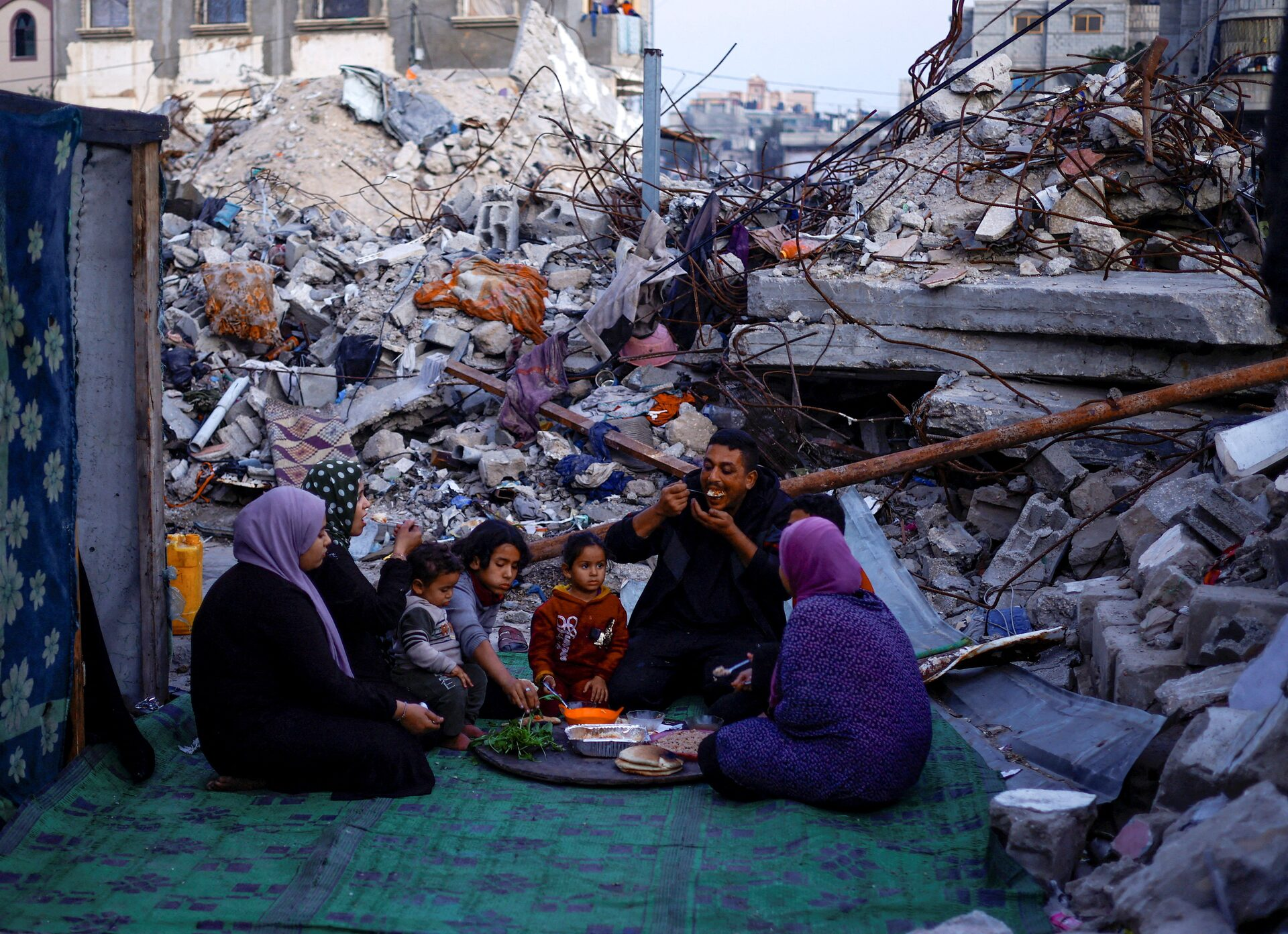
Ongoing wars, pandemics, climate disasters, mass shootings – indeed, death feels more imminent than ever. After my three-year-old daughter Meryem was tragically killed by a truck driver over a year ago, I wanted to confront death. Looking at the pictures of my completely destroyed mini-van, I refused to accept that devastation, chaos, confusion and darkness were the end of my story. I charted out to find meaning, purpose and beauty in the midst of the ugly. In the early stages of my intense grief, I prayed that I not only want to survive this tragedy but grow and thrive with it. I began to process my pain out loud on my podcast, launched a series on facing human mortality in our local community, organized a Faculty Seminar on interreligious perspectives on Death and Dying, and taught an open class on the same subject. As an act of embodied pedagogy, I bring my full self into my professional life and aspire to pull others with me.
In a world which seems to be in perpetual denial of death and offers few spaces to engage this inevitable reality all these efforts have been transformative. [God is the One] Who created death and life in order to test which of you is best in deeds. And He is the Almighty, All-Forgiving,” declares the Qur’an provocatively. Hence, mortality is divinely designed, a piece of art. If death is a purposeful creation by God – by default it cannot be random, meaningless or without wisdom. Quite the opposite – it has life-giving lessons to convey. So, I continue to immerse myself fully into the Muslim practice of memento mori – a meditative experience of cultivating healthy death awareness.
Almost every week the Muslim funeral home sends out at least one or two messages letting the group know that help is needed. Suddenly, death does not seem like a far reality anymore but is close, all-present and shows up with regularity. It reminds me of my life in Türkiye in which the death of someone in the neighborhood is publicly announced over the mosque’s minaret. Everyone can attend the open funeral service, show their last respects and mourn together. Death is a public affair. Strolling through Istanbul, I pass by the many cemeteries in the center of the city, visit and greet the people of the grave as encouraged by Prophet Muhammad. Death and grief are part of life and fully integrated into the city structure and daily rhythm of traditional Muslim societies. The local municipality covers all the costs and provides the burial space. Death is not commercialized.
As I am witnessing, death visits frequently: women and men, young and old, black and white, rich and poor, educated and uneducated. Death does not discriminate. It is an equalizer treating everyone the same as the Qur’an declares, “Every soul will taste death, (Qur’an 3:185). Nonetheless, every person dies in uniquely different ways. Not one death experience is similar to another one. Some deaths feel more painful than others. Visiting my daughter’s graveyard, I also pray for the woman next to her who carries the same first name. A French teacher who was abducted during her evening stroll and brutally murdered. Her body completely dismembered could not be fully recovered. Is it strange that I feel gratitude knowing that my child was not killed by malicious intent and that her body was completely intact? Cemeteries have also become battle grounds for Islamophobes. My infant son who died due to birth complications rests here too. I wonder if it would make a difference to them knowing that half of the cemetery is dedicated to honor the bodies of dead children.
Before I leave for the funeral home, I take my ritual ablution. A symbol of physical and spiritual purification, it prepares the person to be in the right state of mind when meeting the dead. I am a bit nervous before my first visit. What will the dead body look like? How will I react?
For the ritual washing and shrouding of the dead body six volunteers – one lead, five helpers – are needed. The funeral service typically takes place the next day. To delay burials unnecessarily is reprehensible in Islam. The souls long to be reunited with the Creator. Decisions need to be made fast. I am amazed that within five minutes of the group announcement many women immediately step up to come. No hesitation, no reservation, no excuses. We will be there for her, we will honor her, we will show up – for a complete stranger, our sister in Islam. There is so much beauty in this alone. I am in awe of these women who selflessly respond to the call. To answer to the final needs of your fellow sister or brother in faith is a sacred responsibility. I feel humbled and grateful that I can be that person as well. I am also thankful that Islam has not outsourced this obligation but empowers its followers to embrace these Prophetic practices by granting high spiritual rewards. Those who perform them do not ask for any monetary compensation. They simply hope to attain God’s pleasure and love. I appreciate that my tradition espouses solar as well as “lunar spirituality” – the light and the dark. Both are needed for human growth and maturity. Nearness to God is attained by being in these painful spaces as this holy narration explains.
Due to my injuries I was forced to stay in the hospital. When I asked to see my daughter’s dead body in order to kiss and hug her for a final goodbye, it helped me to accept that she was truly gone and eased my grieving process. I could not perform the last rites on her and be present at her funeral. Since then I felt I had missed out on the most important event in our shared life. Perhaps I feel closer to her when being in the presence of the community that she has now joined: The people of the grave. Grief feels less lonely when I am in the company of people who understand the language of loss, who mourn, shed tears and express sadness. It feels comforting to be in a place that allows for difficult emotions to enter and embraces the human being as a whole: joy and sadness, pain and pleasure, the dark and the light, the lows and highs – like the seasons in creation, all changes are necessary for life to thrive. All feelings have their place and I am learning to welcome them all. My involvement in these final rituals is also an act of gratitude towards my community who has supported me and my family in the early weeks of our acute pain. Social connection is essential to sustain ourselves – especially in times of anguish. When we huddle together, the pain is less intense.
After arrival, we walked into the lower floor of the funeral home. When I enter the washing room, I see the dead body wrapped in a big black plastic bag lying on the table. In my heart I feel terror thinking that my child – the most precious person in my life – was treated like that as well. She was put in a freezing, dark morgue – alone with no one on her side. In her last moments she was here – in this cold and unwelcoming basement. I am screaming inside. No warm bunny blankie around her that kept her innocent and pure body cozy. Tears are pouring out now. Death is absolute horror. Cruel and disgraceful.
“Would you like to tell me a little bit about your sister?” I asked the three sisters softly who were joining us now. An invitation, not an imposition. I have discovered that people who grieve are grateful when they can share about the lives who enriched their own. She was a fifty-seven year old woman who came home after a surgery and then suddenly died of complications. How young, I thought. Death does not respect anyone. It does not care about your age, aspirations, dreams, hopes, plans. It did not care that I had invested my best emotional and physical self into my daughter. My sacrifices, my sleepless nights, my physical exhaustion, my dreams and hopes for her – all in vain? Death cannot be negotiated, nor escaped. As Muslims affirm, death is decreed by God alone – regardless of the apparent circumstances, “When their specified time arrives, they cannot delay it for a single hour nor can they bring it forward,” (Qur’an 16:61). I feel comfort as well as distress acknowledging this fact. To know, a higher power with the greatest wisdom and best sense of judgment is in ultimate charge of my end gives me peace. Yet, the Qur’an challenges me to let go of absolute control and surrender to the uncertain.
I learned that she was the middle one among her siblings. She had an adult son and daughter. The sisters do not speak much, they do not shed tears. The atmosphere is quiet and somber. I wonder about their relationships. Did they depart on good terms? I pray I can live a life free from regrets and that I can reconcile early enough with those I have hurt. I take mental notes of those life-giving lessons as I am listening attentively to the wisdom of the deceased sister. I promise myself to say “I am sorry,” “Forgive me,” “I love you,” and “Thank you” more often.
The body is considered a sacred trust in Islam. It needs to be treated with utmost dignity at all times and kept intact. Cremation is therefore strictly prohibited. According to Muslim belief, the spirit is alive, present and observing us closely as we go through the process. We make sure the water has the right warm temperature. We want to comfort her as much as we can. Modesty applies even to the dead body. The Islamic faith instructs us to maintain her dignity and honor as we go through the motions and we must keep her covered, lower our gaze and wash her very gently as outlined in detail by Islamic law. No one looks at her unnecessarily and it is absolutely forbidden to share details about her body with others. Finally, we shroud her into five pieces of white sheet and put her white headscarf on. Every time after we have finished the whole ritual, I am amazed by the expression of tranquility and peace on their faces. They look so beautiful. As if they say to me, “Thank you for beautifying and preparing me for my meeting with my Lord.” I tell them to give my greetings to the heavenly beings and pray for a good ending of my life.
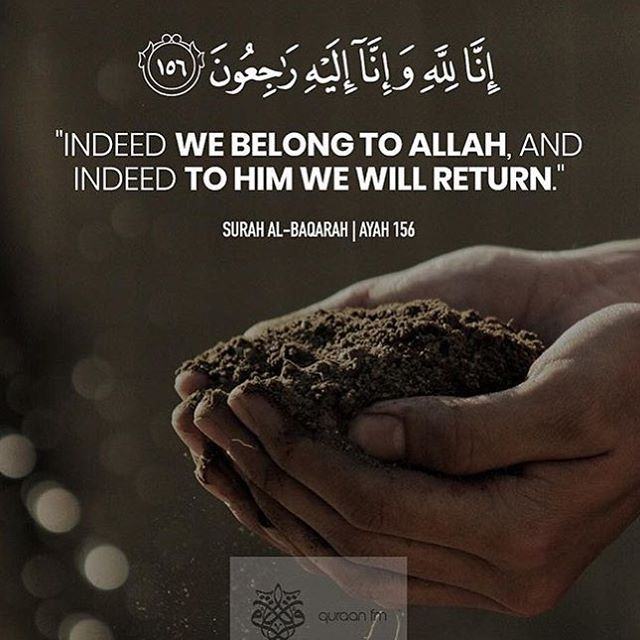
All these essential guidelines are anchored in Islamic law. If the Islamic tradition is so concerned with the needs of the dead, how much more does it call us to preserve the fundamental dignity of every living being? Can a religion that gives so much importance to the deceased, be a threat to society? Here in this room, we treat everyone with the same respect. We transcend gender, racial, ethnic, national, social and political boundaries. Death and grief are universal and a shared human experience: “Indeed, we belong to God, and indeed to Him is our return,” no exceptions as stressed by the Qur’an. None of us is bound to stay. All of us are migratory beings. Migration is part of our spiritual DNA as much as we want to deny it. No one can make an absolute claim on resources, on territories, on wealth, and loved ones. “Be in this world like a stranger or a traveler,” says a holy narration by the Prophet. I take this to mean to cultivate healthy attachments with everyone and anything. Do not obsess or be excessively concerned over worldly affairs because you are destined to leave.
“Remember death often – the destroyer of pleasures,” teaches a Prophetic maxim. And destroying it does. Imagining myself on this table and being stripped off of my agency I cry out: Where is my autonomy, my dignity, my sense of self, my personhood, my freedom? I cannot be treated like that. I have a Ph.D., two Master degrees, I speak several languages, I have worth, I have value, I am more than a stiff, frozen body. This is so degrading. This cannot be my end. Yet, death yells into my face that none of that matters. You came into this world naked owning nothing. Upon arrival you were swaddled into a white blanket and now you are leaving this world swaddled into a blanket again with nothing on you. What is it then that matters on the other side? What is essential on this final journey if I cannot take my family with me, my wealth, my health, my beauty, my reputation? “Everything will perish except His Face. All authority belongs to Him. And to Him you will be returned.” proclaims the Qur’an again. Hope emerges. Everything that is done in His name will last. So long as my living, thinking, feeling and doing is for God – nothing is truly ever lost, wasted or forgotten. What is for eternity, will become eternal.
Death is not glorified in Islam nor avoided. The approach is one of realism. Fear of death is intrinsic to human nature. Too little of it leads to heedlessness, too much of it is debilitating. “Though the physicality of death destroys us, the idea of death may save us,” claims the psychiatrist Irvin D. Yalom. Indeed, mortality gives life meaning. In accepting the agonizing truth of death, I become more mindful, more present and more conscious of my limited time on this earth. I understand that I can depart any minute so I better make sure to use all my resources and all my God-given talents and skills wisely and purposefully. Or in the words of Imam Ali, “Lead such a life, that, when you die, the people may mourn you, and while you are alive they long for your company.”
Back at the graveyard of my daughter, I understand now what supreme goodness looks like. It is to live a life with all your loved ones. No separation, no pain, no heartache. Immortality is the ultimate yearning. It is not a denial of death but a simple, existential human knowing that this is not the end of the human story. The fundamental certainty that supreme goodness exists. I look around me. Spring has arrived and as it is promised in the Qur’an, “Look, then, at the imprints of God’s mercy, how He restores the earth to life after death: this same God is the one who will return people to life after death- He has power over all things.”
I feel spiritually resurrected and revived by these painful insights. So, I return to the world with life-giving lessons gratefully received from the dead.
Ramadan – the most joyous month for about two billion Muslims around the world – is around the corner. March 10/11 will mark the start of the holy season during which Muslims will begin to fast every day from dawn to sunset for thirty days. Before you ask: Yes, not even a drop of water! And here is a helpful guide to learn about a few basics.
As a time of prayer and meditation, Ramadan invites Muslims to return to their spiritual core. Life gets in the way and everything vies for our attention. Ramadan is a moment to turn the noise down and be more attentive to the life of the spirit. It is a time of deep self-reflection and a re-assessment of our relationship with God and fellow human beings.
It seems counterintuitive to celebrate a month that calls human beings to deny themselves the most existential needs like food and water. But because Ramadan encourages us to be our best selves it is a joyous moment of deep self-discovery. There are many reasons why we as a religiously diverse society can appreciate the season of Ramadan. Let me only name three.
Inner Freedom
Freedom – a value that we all cherish. But are we truly free if we constantly chase the things that consumer culture dictates us to acquire? Then we feel overwhelmed and unhealthy by too much clutter in our homes and processed food in our bodies. Only human beings have the power to say NO to even their most existential needs like food and water. This is the great gift of human free will. In Ramadan the human being rediscovers their ability to free themselves from everything that is non-essential. If one can show self-restraint from even their most basic needs, then they are capable of achieving much more. This is a truly empowering experience. To discover the potential and pathway for true human liberation is to negate everything that weighs the spirit down. In Ramadan, human beings aspire to the highest level of spiritual self-discipline by engaging the seven gates of the heart more than usual: Eyes, ears, tongue, stomach, feet, hands, and genitals are engaged in a way that honors them being a sacred trust from their Creator. Human beings are invited to refrain from vain and indecent behavior and conduct – all outlined in detail in the Islamic tradition. This is why Prophet Muhammad famously said, “Whoever does not leave evil words and deeds while fasting, God does not need him to leave food and drink.” Harmful, wasteful, meaningless thinking, feeling and doing should be avoided more than ever. Giving in to every urge for instant self-gratification is not an act of freedom. Instead, to attain wholesome and long-lasting pleasure is to let go of certain low desires. In doing so one rediscovers the freeing elements of abstinence, patience and moderation – virtues that the Qur’an praises in high regard.
Gratitude
Oftentimes it is through the absence of things that we start to see their true worth and appreciate them more. At the end of a long fast, a piece of dry bread can taste so good. The value of the first drop of water that flows through the body is affirmed by every cell. We do not need much to be satisfied as this Prophetic narration captures it so well: “Contentment is a never-exhausted treasure.” Expressing gratitude is not only physically beneficial for human well-being but is part of the spiritual DNA. Existential gratitude is the realization that without a compassionate and wise Creator at work we cannot be. Humankind is unable to sustain themselves without that Higher Power that finetunes the universe in such a way for human beings to exist.
Humility
Such awareness invites the person to genuine humility. All blessings on the table can only be enjoyed because of the many hands that touched them. In my own family, we often read the labels on the products to explore where they came from. Bananas from Guatemala, pickles from India, coffee from Ethiopia, chocolate from Belgium – human beings are part of an interdependent web of life. We cannot be without one another. In Ramadan people honor these social connections more than ever by strengthening communities, growing in empathy by feeding those who are less fortunate, by reconciling and asking for forgiveness.
A version of this essay has appeared on U.S.Catholic
For Christians, the contemplative Christmas season is over. Holy Week and Easter will soon be upon us. During these sacred observances, the figure of Mary looms large: from giving birth in a stable to keeping vigil at the foot of the cross. For me as a Muslim woman, St Mary or Maryam (Turkish: Meryem) as she is called in the Qur’an, is a source of inspiration. As a scholar, I often discover new aspects about her unique persona. Muslims often return to reflect on her spiritual legacy.
Mary unites us—Jews, Christians and Muslims—even if we harbor irreconcilable theological differences about her status. As the daughter of a Jewish family from Nazareth, she is later revered in Christianity as the Mother of God (theotokos). For Muslims too she has a special place because she is a role model of ultimate devotion to God and virtue. She is honored because of her unique personality – not only as the mother of Jesus, but specifically because she is Mary. This aspect is therefore emphasized in the Qur’an, And (remember) when the angels said, “O Mary, God has chosen you and purified you, and He has favored you above all (other) women of the worlds,” (Qur’an 3:42).
Mary’s son is therefore often referred to in the Qur’an through the honorific title of “Jesus, son of Mary” (Arabic: ‘Isa ibn Maryam) (Qur’an 5:75). It is Mary who gives Jesus a special status—not the other way around. The Qur’an honors her by naming the nineteenth chapter—Surah Maryam—after her. She is the only woman who is mentioned by name 34 times. To this day, Muslims and non-Muslims from all over the world make pilgrimages to Mary’s house (House of Virgin Mary) to Efes in Türkiye. It’s a deeply moving experience.
Mary remains a role model of piety for me and many other Muslims. That’s why I named my daughter Meryem after her. For me, this naming was a sincere prayer, a hope. I prayed to my Creator that my daughter would also embrace Mary as an inspiration, a guide in her life. I followed the example of Mary’s mother St. Anne, or Hannah in Hebrew— and repeated the supplication she spoke during her pregnancy, “My Lord! I dedicate what is in my womb entirely to Your service, so accept it from me. You (alone) are truly the All-Hearing, All-Knowing,” (Qur’an 3:35).
Mary’s mother Anne is shocked at first. She was expecting a son whom she wanted to dedicate to the Holy Temple. But God assures her. Mary is His choice and His will:
When she delivered, she said, “My Lord! I have given birth to a girl,”—and God fully knew what she had delivered—“and the male is not like the female. I have named her Mary, and I seek Your protection for her and her offspring from Satan, the accursed,”(Qur’an 3:36).
Mary is placed in the care of Prophet Zachariah and is the first female to be granted access to the Holy Temple in Jerusalem. There in her prayer niche (the mihrab, the same term for the section in the mosque that indicates the direction of prayer), Mary spends her time in sincere worship. Mary is omnipresent in our important daily Muslim prayer (salat) and always in our memory. Here, I look up to her too. Too often, I and many other Muslim girls and women have been denied entry into mainstream society because of our religious practices. Mary—a symbol of hope for positive change. Mary, the young, courageous girl who challenged the status quo. The religious elite, the male clergy, the patriarchy are all questioned.
Zachariah finds her with special fruits and gifts. He is taken by surprise, So her Lord accepted her graciously and blessed her with a pleasant upbringing—entrusting her to the care of Zachariah. Whenever Zachariah visited her in the sanctuary, he found her supplied with provisions. He exclaimed, “O Mary! Where did this come from?” She replied, “It is from God. Surely God provides for whoever He wills without limit,” (Quran 3:37).
Mary provokes with her answer. She questions causality. God is the real Causer of causes. Causality is simply a curtain to challenge us and test our beliefs. It is not the cloud that sends the rain. The cloud has no consciousness and cannot express compassion. It is God – the Most Merciful, the true Provider who knows us and our needs and responds to them appropriately. There and then Zachariah is moved by Mary’s profound answer to pray to God for a child. He realizes that even in his old age God can grant him a descendant because He is the Most Powerful:
Then and there Zachariah prayed to his Lord, saying, “My Lord! Grant me—by your grace—righteous offspring. You are certainly the Hearer of (all) prayers.” So the angels called out to him while he stood praying in the sanctuary, “God gives you good news of (the birth of) John who will confirm the Word of God and will be a great leader, chaste, and a prophet among the righteous.” Zachariah exclaimed, “My Lord! How can I have a son when I am very old and my wife is barren?” He replied, “So will it be. God does what He wills,” (Qur’an 3:38-40).
Mary’s life is an endless inspiration. She invites those of us who operate in a world of causality to affirm the true Oneness of God and assess our assumptions. But at times she herself as a devout believer is puzzled over God’s power to create without an apparent cause, (Remember) when the angels proclaimed, “O Mary! God gives you good news of a Word from Him, his name will be the Messiah, Jesus, son of Mary; honored in this world and the Hereafter, and he will be one of those nearest (to God). And he will speak to people in (his) infancy and adulthood and will be one of the righteous. Mary wondered, “My Lord! How can I have a child when no man has ever touched me?” An angel replied, “So will it be. God creates what He wills. When He decrees a matter, He simply tells it, ‘Be!’ And it is! (Qur’an 3:45-47).
In Mary’s struggles I see the desperation and fear, but also the hope of a mother. Mary is so raw, so human. As she has to give birth alone in the wilderness, I remember the emotional and physical strain that every expectant mother experiences during her pregnancy. Mary, without any support, help, or resources, is now completely isolated from the outside world. How can she give birth and care for her child in this desert? A child that is fatherless? A scandal! Her community will stone her for this. A return is impossible.
Her hopelessness and her pain are palpable in her words. She reaches her end. She just wants to die. Then the pains of labor drove her to the trunk of a palm tree. She cried, “Alas! I wish I had died before this, and was a thing long forgotten!” (Qur’an 19:23).
But it is precisely in this intimate moment of loneliness and utter despair that God comes to her rescue, So a voice reassured her from below. “Do not grieve! Your Lord has provided a stream at your feet. And shake the trunk of this palm tree towards you, it will drop fresh, ripe dates upon you. So eat and drink, and put your heart at ease. But if you see any of the people, say, ‘I have vowed silence to the Most Compassionate, so I am not talking to anyone today.’” (Qur’an 19:24-26).
Mary’s life and personality is full of lessons and wisdom. How could I not name my daughter after her?
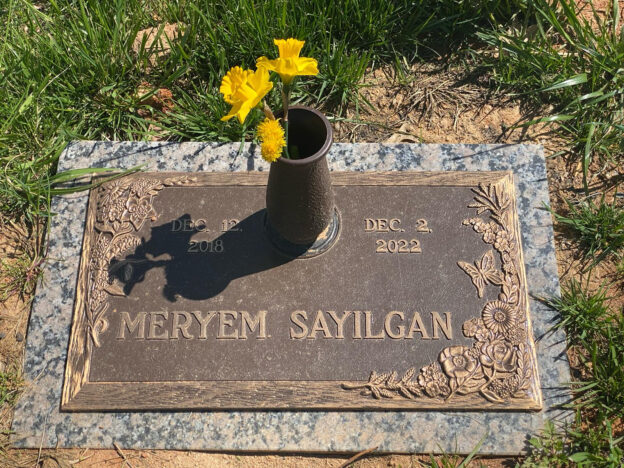
My beautiful Meryem was born on December 12, 2018 under very difficult circumstances. She was tragically killed by a truck driver on December 2, 2022—ten days before her fourth birthday. Friends, neighbors, colleagues, students, and strangers—Jews, Christians and Muslims—have prayed for her and my family during this difficult time. Prayers were offered for her in churches, synagogues, and mosques. For me, this was an answer to my prayer: Meryem had brought people together in a unique way and had touched them deep in their hearts. Her birth was a miracle, but her death also led to a spiritual awakening of so many people. I have reflected on her spiritual legacy and still continue to do so. Meryem was born in the state of Virginia and was buried in the state of Maryland. Both states trace their name’s origin to St. Mary. Not a coincidence for me. Mary still connects us.
God’s compassion and love was Mary’s constant companion. He never leaves us, even in our profound pain. As a grieving mother, I know that the loss of a child is the most distressing experience in a person’s life. I miss my beautiful Meryem every second. The heartache, sweet longing and holy yearning will never go away. But my hope and my conviction that my merciful Creator will reunite us in the afterlife gives me enough strength and patience to walk this painful path.
My dear colleagues and friends, dear neighbors, dear sisters and brothers in faith, my dear community,
“Indeed, to God do we belong and indeed to Him is our return,” (Qur’an 2:156)
As many of you know by now, our beautiful daughter Meryem has returned to our Creator on December 2, 2022 – ten days before her fourth birthday. She was tragically killed by a trailer-truck that had rear-ended our car. That evening my two daughters and I wanted to spend time at a friend’s house who lives only 15 minutes away. The GPS showed me we had only five minutes left to get there – but we never arrived. Meryem died that same night after medical staff tried to resuscitate her for over an hour. Elif and myself were also rushed to the hospital. She had a brain concussion and was in critical condition. I had two fractures in my spine. Legal investigation is still ongoing.
Regardless of the apparent circumstances, the Qur’an reminds me over and over as a devout Muslim that God is the One and Only who gives life and creates death as stated here and in many other passages, “He is the One Who created death and life in order to test which of you is best in deeds. And He is the Almighty, All-Forgiving,” (Qur’an 67:2).
God has given her and only He has the power to take her. I don’t know the reasons why Meryem had to leave so soon but I have ultimate trust in His expansive compassion and wisdom. Most certainly, there are trillions, endless wisdoms for her early departure as there are endless elements involved in the creation of a human being. I humbly acknowledge that my capacity to understand is extremely limited. As the Qur’an states, “You may dislike something although it is good for you, or like something although it is bad for you: God knows and you do not”, (Qur’an 2:216).
For Muslims, death is not a punishment nor a random event. It is created, designed and willed by God’s wisdom and power alone. While we do not glorify death, we affirm that death is ordained by God and cannot be escaped, “When their specified time arrives, they cannot delay it for a single hour nor can they bring it forward,” (Qur’an 16:61). Our patience and surrender in His divine decree will be rewarded. We miss Meryem every day but I am at peace and content with God’s plan. I find comfort and solace in my Lord’s promise of eternal and joyous reunion as one of many Prophetic traditions narrates,
“The Messenger of God (peace and blessings be upon him) said:
When a person’s child dies, God says to His angels, ‘You have taken the child of My servant.’
They say, ‘Yes.’
He says, ‘You have taken the fruit of his heart.’
They say, ‘Yes.’
He says, ‘What did My servant say?’
They say, ‘He praised you and said “Indeed, to God we belong and indeed, unto Him is our return.’
God says, ‘Build for My servant a house in Paradise and call it the House of Praise.’” (Hadith Al-Tirmidhi)
The Prophet (peace and blessings be upon him) has witnessed the death of his own six children – three died during infancy and three died during young adulthood. When his son Ibrahim died at 18 months he – a grieving father – said these words that provided me consolation,
As Ibrahim surrendered to death, Prophet Muhammad’s hope which had consoled him for a brief while completely crumbled. With tears in his eyes he talked once more to the dead child: “O Ibrahim, were the truth not certain that the last of us will join the first, we would have mourned you even more than we do now.” A moment later he said: “The eyes send their tears and the heart is saddened, but we do not say anything except that which pleases our Lord. Indeed, O Ibrahim, we are bereaved by your departure from us. (Sahih Bukhari)
It is hard to believe that it is almost going to be a year since Meryem’s death. The physical injuries have mostly healed even though I do suffer from chronic back pain now. We are very grateful to God that Elif is healthy and thriving. Needless to say that the emotional pain is one you endure for a lifetime. As one grieving parent wrote to me, “You never get over it. You just learn to live with it.” The constant heartache, the sweet sadness, the yearning and holy longing for our beautiful Meryem – all these feelings we have come to accept as part of our lives now. Meryem left a giant void that can never be filled and that is alright. I am so grateful to God that He allowed me to be in her life and experience her love that will last forever. As a grieving mother and a Muslim scholar, I continue to reflect on the meaning of death and dying. I have shared my theological reflections publicly on this podcast and I am grateful to God that some parents were able to find some light through my own pain.
One father’s words moved me particularly to tears: “Our firstborn child was born with an undiagnosed heart defect and returned to our Creator just three weeks after his birth. Therefore your lecture series was all the more valuable for us during this difficult time. We followed all parts with great attention and were able to draw a lot of energy and strength from them.”
Salih has also finished his book on God, Evil and Suffering in Islam (Cambridge University, Press 2023). He never imagined that one day he will experience the most distressing pain and suffering for a parent – the death of your own child. Our hope and prayer is that the work and sharing we are doing will help others to find meaning and purpose in their own pain and perhaps comfort in knowing that they are not alone.
As a family we are grateful that God is blessing us with enough patience and strength to walk this painful path. We have returned to our work and are learning to live with this new reality. We are grateful for a wonderful community through which God sends us His compassion and mercy.
This is why I wanted to reach out to you and take a moment to express my gratitude to each of you – near and far – who have supported us during this painful time. Forgive me for this generic letter but I needed to say how much everything has meant to us. We were speechless by the outpouring of love, care and help we have received. The prayers, the tears, the hugs, the visits, the messages, the letters, the calls, the flowers, the meal train, the gifts – all of it, every single gesture has meant the world to us. It was a lifesaver. I am unable to describe the amazing love, compassion, kindness that we experienced. I pray that I can share that love and kindness with others who are in need. I hope I will be able to serve them in a meaningful way and make their burdens equally lighter.
From the bottom of my heart – Thank you! May God bless you and your loved ones. May God comfort the hearts of those who are hurting and experience hardship. May He give you peace. May He grant you the best of this life and the life to come.
Many of you attended Meryem’s funeral for which I will be forever grateful. As a mother, it has meant the world to me because of my injuries I could not be present myself. There is no denying that pain, suffering and evil exist in the world – but they do not have the last word. While I was watching the funeral service take place from my hospital bed, I could not help but be in awe of the beauty of what I was witnessing. Meryem was surrounded by people who were shedding tears for her, expressing their sadness, raising their hands in prayer for a better future yet to come. There was so much love around her. Children embody so much that we cherish – innocence, purity, kindness and unconditional love and forgiveness. Meryem continues to teach me fundamental lessons about the meaning of life. She loved and was loved. She left indelible imprints in our lives. She lived a life full of meaning and beauty. She returned to our Creator pure, at peace and whole. The last time I was able to see her, touch and comb her beautiful golden hair and kissed her for a final goodbye her face was radiant, full of serenity and peace. When she appeared to her father in his dream and was asked why she is not visiting us anymore, she only replied with the word: “Al-Jannah, al-jannah (Paradise, paradise)!” Many other dreams followed and gave us good news about her happiness in the hereafter. For us as Muslims, dreams are a channel to the dimension of the afterlife and give us enough comfort and consolation.
Meryem belonged to Him all along and returned home. Indeed, we all belong to God and indeed to Him is our return – He is our home. He is the ultimate source of beauty, goodness, peace and compassion.
Finally, I will leave you with the words of Muslim theologian Bediüzzaman Said Nursi, whose piety and devotion has deeply informed my own spirituality and given me strength in times of hardship:
O human being! Do you know where you are going and where you are being driven? As is stated at the end of the Thirty-Second Word, a thousand years of happy life in this world cannot be compared to one hour of life in Paradise. And a thousand years of life in Paradise cannot be compared to one hour’s vision of the sheer loveliness of the Beauteous One of Glory. You are going to the realm of His mercy, and to His presence.
The loveliness and beauty in all the creatures of this world and in those worldly beloveds by which you are so stricken and obsessed and for which you are so desirous, are but a sort of shadow of the manifestation of His beauty and of the loveliness of His names; and all Paradise with all of its subtle wonders, a single manifestation of His mercy; and all longing and love and allurement and captivation, but a flash of the love of the Eternal Worshipful One and Everlasting Beloved. You are going to the sphere of His presence. You are being summoned to Paradise, which is an eternal feasting place. Since this is so, you should enter the grave not weeping, but smiling in expectation.
The phrase announces this good news as well: O human being! Do not be apprehensive, imagining that you are going to extinction, non-existence, nothingness, darkness, oblivion, decay, and dissolution, and that you will drown in multiplicity. You are going not to extinction, but to permanence. You are being impelled not to non-existence, but to perpetual existence. You are going to enter not darkness, but the world of light. And you are returning to your true owner, to the seat of the Pre-Eternal Monarch. You will not drown in multiplicity, you will take your rest in the realm of unity. You are bound not for separation, but for union.”
Lastly, for those who experience a bittersweet holy longing for their departed loved ones, or a yearning for something better, a better future, here is a song I dedicate to you. It reminds me of my sweet Meryem whom I always called my “Golden Girl” because of her beautiful light hair…


 Zeyneb Sayılgan